



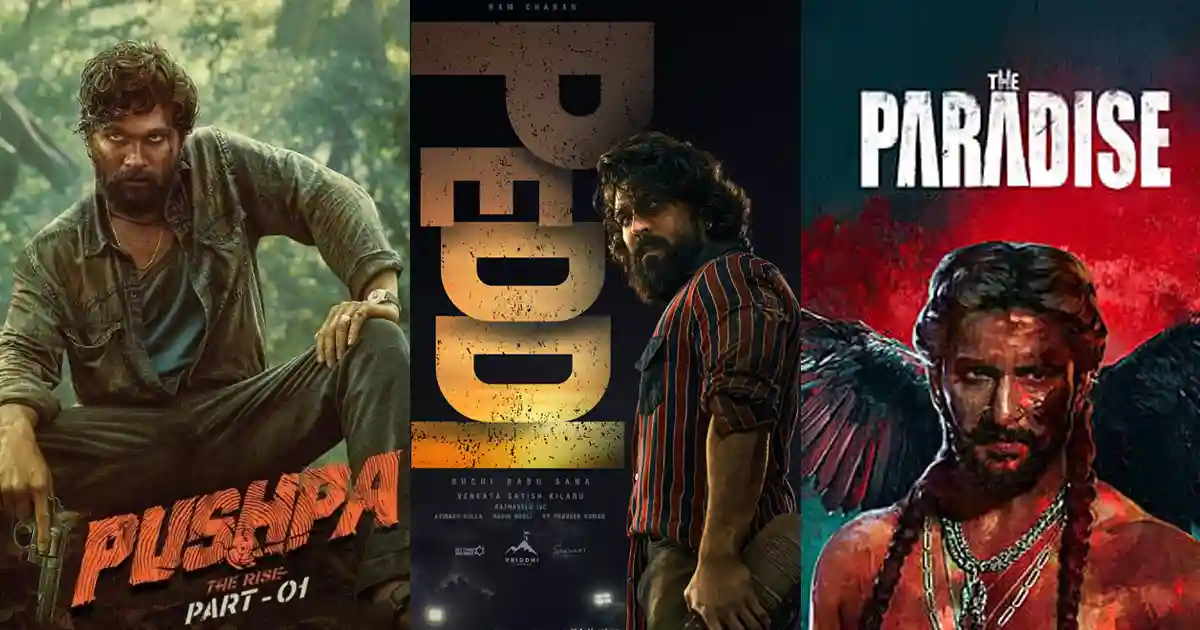
A section of Tollywood fans used to make fun of Tamil films for being too heavy on stories about suffering, caste, and social injustice. But some of those grounded Tamil films earned huge respect and box-office success because audiences genuinely connected with the emotion. The irony is that the Telugu industry itself is now caught in the exact same habit, chasing one single formula in its big commercial movies.
The real trouble started when Sukumar and his disciples turned one specific idea into a recurring formula: a character fighting for identity and respect. In Pushpa, the action was just the packaging, while the actual soul was Allu Arjun crawling up from the bottom just to earn a name and erase his family’s shame. That emotional core hit so hard with the public that Sukumar’s disciples seemingly found a shortcut to emotional connection.
Next came Buchi Babu Sana, who took that exact same idea into Peddi with Ram Charan and only changed the scale. Instead of one man fighting for his name, the hero fights to secure government identity and basic rights for his entire abandoned village. The film worked decently at the box office, but anyone paying attention can clearly feel the familiar Pushpa engine running beneath the sports backdrop.
Now, Srikanth Odela, another filmmaker from Sukumar’s school, has done the exact same thing with The Paradise, starring Nani. He simply moved the setting to a different era and made a clan of five thousand people fight to prove they belong to the same country as their rulers. But because audiences have already seen this same “give us our identity” fight twice in recent memory, the emotion feels recycled, and the movie stumbles.
The problem is not whether a movie collects money or not, but about young directors chasing the exact same concept without giving audiences any breathing room. You can use a similar emotional point if there is a gap of five or ten years between films. But when directors change only the hero, the village, and the costumes while keeping the exact same emotional skeleton, audiences get bored very quickly.
It is high time Telugu directors step outside this safe zone and stop following this herd mentality. Our young filmmakers are brilliant technicians with grand visual ambitions, but they need to bring fresh conflicts to the screen. If they really want to give audiences a great theatrical experience, they must find new emotions to explore instead of repeatedly milking the same identity-crisis formula.