Home Tags Posts tagged with "Tamannaah Bhatia"

Tamannaah Bhatia

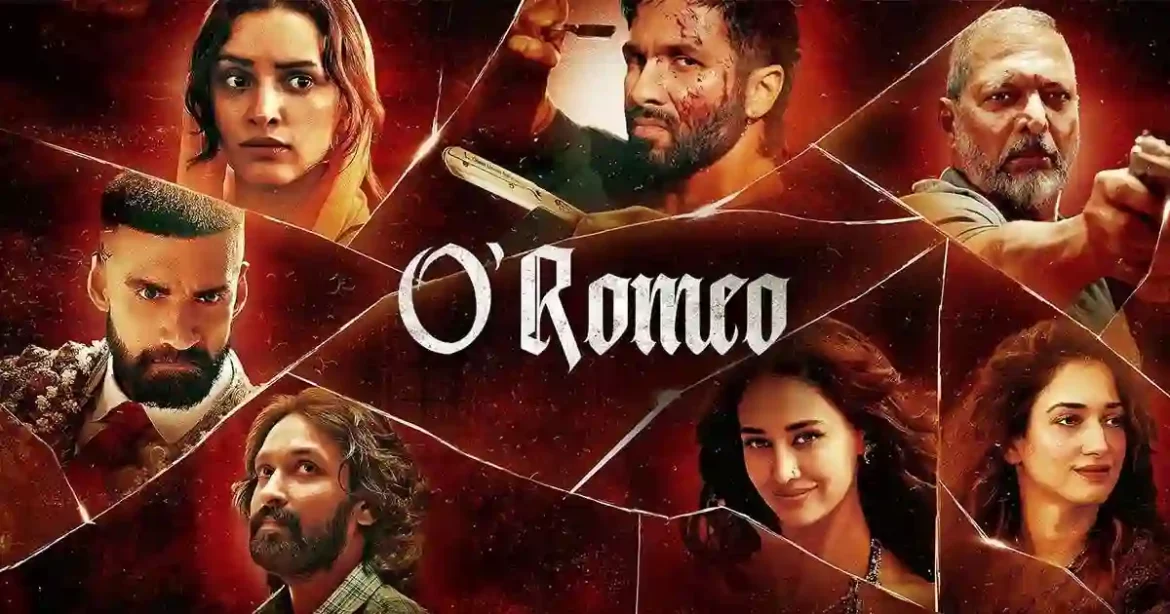
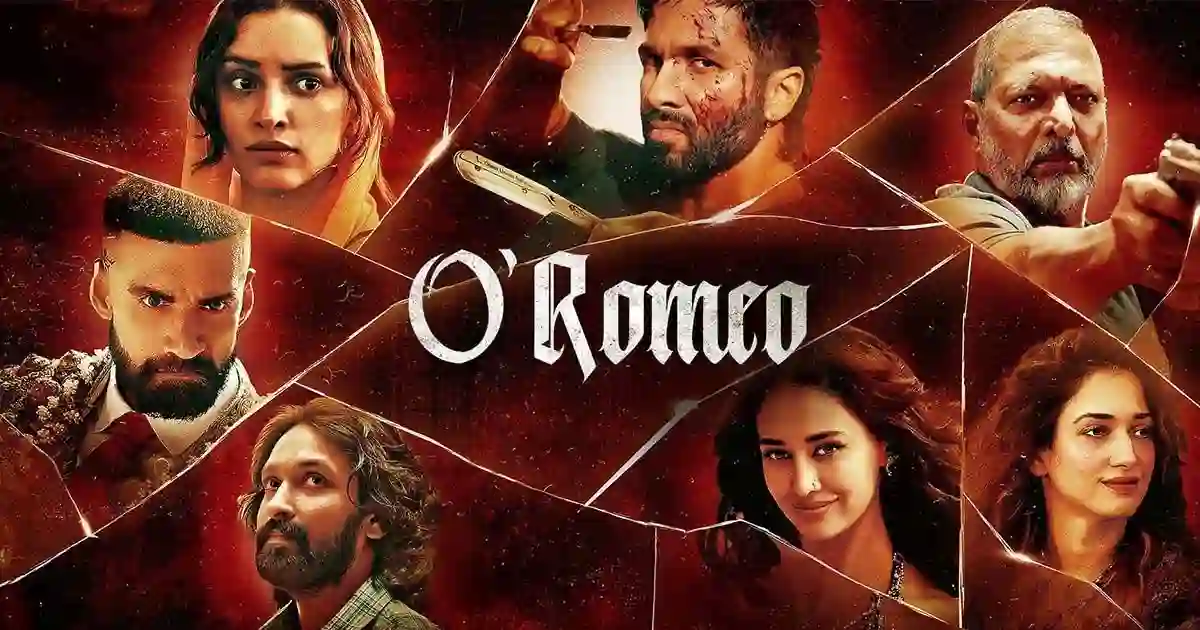
O-Romeo

O-Romeo

Movie Name : O Romeo

Release Date : Feb 13, 2026
123telugu.com Rating : 2.5/5
Starring : Shahid Kapoor,Triptii Dimri ,Avinash Tiwary,Farida Jalal ,⁠Tamannaah Bhatia ,Disha Patani.etc..
Director : Vishal Bhardwaj
Producer : Sajid Nadiadwala
Music Director : Shankar-Ehsaan-Loy
Cinematographer : Ben Bernhard, BVK
Editor :  Praveen Prabhakar

Related Links : Trailer

A crazy combination in Bollywood, Shahid Kapoor and Vishal Bhardwaj have now come together with a film titled O’ Romeo. This romantic action thriller created decent expectations among the audience and was released in theatres today. Triptii Dimri played the female lead. Let’s see how much the film impresses.

Story:

Set in Mumbai in 1995, the story follows Ustar (Shahid Kapoor), a contract killer. He works for Police Inspector Khan (Nana Patekar) and takes money from him to eliminate criminals. One day, Afshan (Triptii Dimri) approaches Ustar and asks him to eliminate four people who killed her husband. She says Jalal (Avinash Tiwary) played a key role in her husband’s murder. However, Ustar refuses to kill Jalal and sends her away. What happens next? Why does Afshan end up staying with Ustar? Does he fall in love with her? What happens in the end? The film has the answers.

Plus Points:

Shahid Kapoor delivers a good performance in this Vishal Bhardwaj’s directorial. The actor looks impressive as a stylish gangster, and his action sequences are well designed. Triptii Dimri does justice to her role and performs convincingly as a woman seeking revenge.

Some scenes between Shahid and Triptii work well, and their dialogues are neatly written. The theatre action scene at the beginning is stylishly shot. Shahid also portrays the pain in love effectively. A few twists in the film are interesting, especially the one related to Triptii’s character. The scenes where the protagonist goes to extremes for his loved one are impressive. The climax action episode is well designed.

Minus Points:

The film is a blend of gangster, action, and romance elements, which leaves the viewers confused about the genre. Some dialogues meant to make the hero look powerful don’t work well. Though the making is good, the core plot is routine.

A few illogical scenes weaken the narrative. The first half feels slow and may also test the patience levels. Apart from the action, the narration feels flat. The track between the lead pair becomes boring at times. Though there are many actors, their roles don’t get enough importance. Especially, Tamannaah’s role doesn’t leave an impact, and a cameo in the flashback also feels wasted.

While the action scenes are stylish, their placement isn’t always effective. The hero-villain face-off could have been better. The songs aren’t very impactful.

Technical Aspects:

As a director, Vishal Bhardwaj seems to have put in a lot of effort. However, since the core story is simple, he tries to move it forward by adding action and romance. The screenplay could have been much better.

Ben Bernard’s cinematography is okay. The songs are average, but the background score works well. Arif Sheikh’s editing could have been sharper, as several scenes needed trimming. Production values are good.

Verdict:

On the whole, O’ Romeo is a mediocre romantic action thriller that doesn’t impress entirely. Shahid Kapoor’s performance and the stylish action blocks are its biggest strengths. However, weak writing, slow pacing, and unimpressive music hold the film back, and hence it ends up being a below-par watch.

123telugu.com Rating: 2.5/5

Reviewed by 123telugu Team 

0 FacebookTwitterWhatsappCopy Link
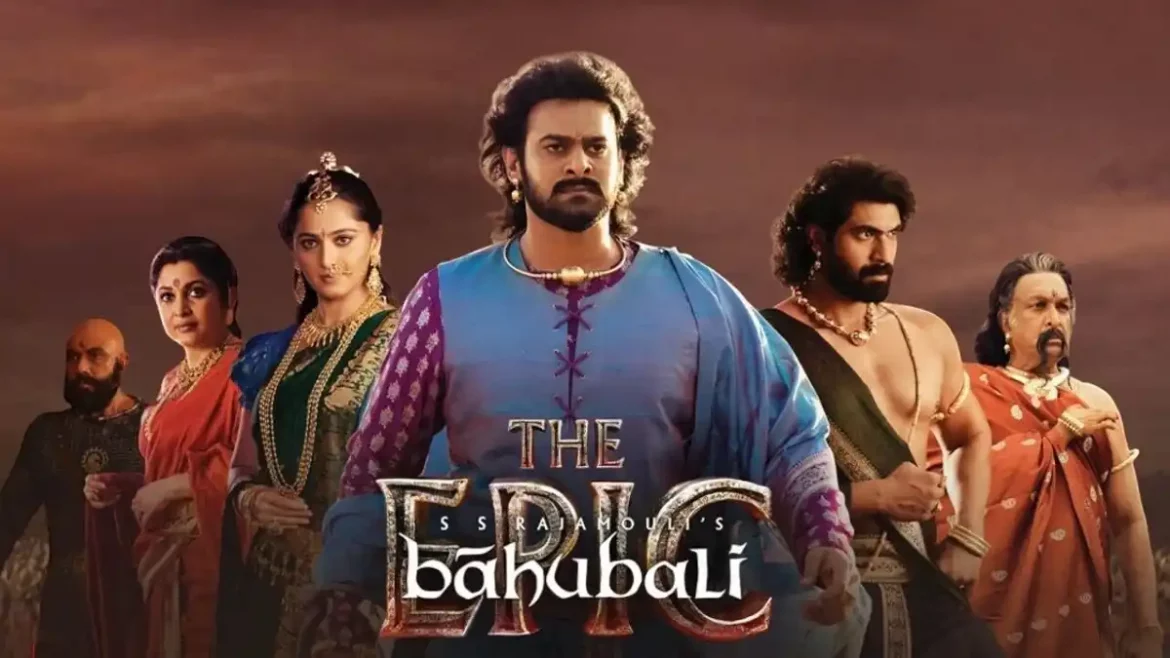
Baahubali The Epic

Baahubali The Epic

After the pandemic, Telugu cinema found itself riding a curious wave of re-releases. From nostalgic favourites to cult blockbusters, many films returned to theatres. Some failed to connect again, while others pulled off pleasant surprises.

Now, the maverick director SS Rajamouli, the man who redefined Indian cinema with Baahubali, has joined this trend in his own inventive way. Instead of simply re-releasing Baahubali: The Beginning (2015) and Baahubali: The Conclusion (2017), he combined both parts into one grand film titled “Baahubali: The Epic.”

This new version, which premiered last night across the globe, runs close to four hours. More than the runtime, it is the experience that feels different, familiar yet surprisingly fresh. Rajamouli trimmed, rearranged, and restructured scenes, turning two monumental chapters into one unified narrative meant to give audiences, both old and new, a seamless journey through Mahishmathi.

Why Rajamouli Is Still Called “Jakkanna”:

Rajamouli earned the title Jakkanna because of his relentless obsession with detail. He never takes the audience for granted, even when he knows they already adore his work.

That shows right from the start. The title card of Baahubali: The Epic is not a reused graphic; it is newly designed with symbolic imagery that celebrates the saga itself. It is his way of saying, “You may know the story, but you have never seen it like this.” That is where you realise once again why people call him a madman when it comes to cinema.

A Fresh Beginning:

Gone is the elaborate prologue that once detailed the kingdoms surrounding Mahishmathi. Rajamouli now begins the tale more intimately with Sivagami (Ramya Krishna) emerging from a secret cave, carrying the infant in her arms. The haunting visuals of her fleeing the soldiers, the tension in her eyes, and her disappearance in the river currents all stay exactly as they were.

The shift happens soon after. The childhood scenes of Shivudu (Prabhas as young Baahubali) have been rearranged. Rajamouli changes the order, showing him lifting the Siva Lingam for his mother (Revathi), then discovering the wooden mask, and only after that asking, “What’s up there, maa?” The reversal gives the sequence a natural mystery, as if the boy’s destiny is calling before he even asks the question.

This directly flows into the “Dheevara” song, creating a tighter emotional beat. The conversation between Tanikella Bharani and Shivudu’s parents has been completely removed.

Avantika’s Arc Retold in a Breath:

The Avantika (Tamannaah) chapter, which originally took nearly 30 minutes, is the most heavily altered section. Instead of showing her entire journey, Rajamouli replaces it with a voiceover, narrated by himself.

In a few lines, he explains who Avantika is, what her mission was, how Baahubali met her, fought beside her, and fell in love. The romantic portions and “Paccha Bottesina” song are gone, yet the essence remains.

The iceberg sliding escape sequence is slightly shortened, yet the transition feels natural. Rajamouli makes the cut invisible, which is rare.

Even Kattappa’s (Sathyaraj) first appearance, where he meets Aslam Khan (Kichcha Sudeep), has been removed completely.

Mahishmathi and the Rise of Baahubali:

The shift to Mahishmathi happens faster now. Scenes that previously showed the cruelty of Bhallaladeva’s rule are trimmed. The focus is now on the people recognizing Baahubali’s return, and the emotional pull of that moment lands stronger than before.

The installation of Bhallaladeva’s 100-foot golden idol is shorter, highlighting people’s awe instead of pure spectacle. A few scenes involving Baahubali’s mother and Avantika are also edited out to keep the narrative clean.

The rescue of Devasena (Anushka Shetty) remains one of the standout sequences, though minor shots like the chariot emerging through fire have been dropped. Rajamouli keeps the emotional peaks intact, especially the powerful moment when Kattappa places Baahubali’s feet on his head.

The Kalakeya war sequence follows, slightly trimmed in pacing. Some visuals of Kattappa arranging shields and brief war preparations are shorter. However, Rajamouli maintains the grandeur and intensity so that the viewer never senses any loss.

The climactic moment of the first film, where Kattappa kills Baahubali, now acts as the interval point of Baahubali: The Epic. The interval card humorously reads: “YOU DON’T NEED TO WAIT TWO YEARS TO KNOW WHY KATTAPPA KILLED BAAHUBALI.” It is a wink at the audience, playful, smart, and self-aware.

The Heart of The Conclusion:

The second half begins with a tighter version of The Conclusion. The opening festival that marks Mahishmathi’s tradition is trimmed, and the second stanza of “Saahore Baahubali” featuring emotional and war montages has been removed.

The sequence where Sivagami begins searching for a bride for Amarendra Baahubali also loses a few connective moments. Scenes showing Baahubali and Kattappa wandering through the kingdom are cut for smoother pacing.

Then comes the introduction of Devasena, Queen of Kuntala dynasty. Her entry, the confrontation, and the small battle where Baahubali and Kattappa playfully fight side by side all remain but are slightly shortened.

Comic relief scenes, like Kattappa teasing Baahubali for his dramatic way of expressing love and Kumara Varma’s (Subbaraju) attempts to prove his strength, are gone. Rajamouli surprisingly retains the wild boar hunting sequence, keeping a touch of rural flavour and lightheartedness.

The folk song sung by Kattappa and the lullaby “Kanna Nidurinchara” featuring Anushka have been completely removed. A few lighter scenes involving Kumara Varma and Baahubali are also cut, and the film now directly moves into serious emotional territory.

Emotion Uncut:

From the moment Amarendra Baahubali saves Kuntala Kingdom, the film barely loses a single emotional beat. The transition to Mahishmathi, his identity reveal, and his relationship with Devasena are all preserved.

Rajamouli trims only the edges, such as Bijjaladeva’s (Nassar) angry dialogues and Subbaraju’s lines during Devasena’s baby shower, while ensuring the drama and sentiment remain strong.

The emotional arc surrounding Amarendra’s death, Sivagami’s guilt, and Mahendra Baahubali’s rise stays fully intact. The final war sequence between Baahubali and Bhallaladeva is slightly tightened. Shots like Kattappa slapping Bijjaladeva and Baahubali lifting a giant tree are shorter, but the power remains.

Instead of end credits, Rajamouli concludes with a thank-you card, expressing gratitude to everyone who contributed to the making of the Baahubali universe. It is a small gesture but a thoughtful one.

What’s Gone and What Stayed:

Most of the cuts come from Baahubali: The Beginning, including Avantika’s arc, the early war scenes, and comic bits. Baahubali: The Conclusion largely remains since it carries the emotional heart of the saga with powerful performances from Prabhas, Rana Daggubati, Ramya Krishna, Anushka Shetty, and Sathyaraj.

Only a few songs and lighter interludes were removed to maintain the emotional pace Rajamouli envisioned.

A Glimpse Beyond the Epic:

Just when the audience thought Rajamouli had wrapped up all surprises, the screen faded to black only to open a whole new chapter. Right after the cheeky interval line, “You don’t need to wait two years to know why Kattappa killed Baahubali,” theatres across the globe lit up again with something completely unexpected, a teaser for the upcoming animated feature Baahubali: The Eternal War Part 1.

Here comes the twist. SS Rajamouli is not directing this one but presenting it, while Ishan Shukla takes charge as the director. The two-and-a-half-minute teaser unveiled a completely new world, unlike anything seen before in the Baahubali universe.

It begins with the powerful voice of Sivagami, calm yet commanding, as she speaks about the afterlife of Amarendra Baahubali. Her words suggest that his death was not the end but the beginning of a new cosmic journey. The visuals then descend into Tripura, the fallen city of Patal Lok, where Indra and Vishasura are locked in a divine battle for Baahubali.

In the middle of the chaos, Baahubali appears, dancing like Lord Shiva, graceful yet fierce, surrounded by fire and rhythmic chants that echo through the realm. As Indra defeats his opponent, he asks, “Who will now save your Baahubali from Indra?” A heartbeat later, thunder breaks across the sky as a chariot pulled by elephants descends from the clouds. Baahubali stands tall, eyes blazing, and replies, “I am asking the same, Indra. Who will now save you from Baahubali?” And yes, it is the unmistakable voice of Prabhas.

Sivagami’s voice returns one last time, declaring, “The fate of these fourteen universes now lies in the hands of Baahubali.” The screen erupts into a celestial war between Indra and Baahubali, both appearing in their supreme divine forms, ready for an epic battle.

The teaser concludes with the title card Baahubali: The Eternal War Part 1, announcing its theatrical release in 2027.

The crowd’s reaction was electric. Cheers, whistles, and applause filled the halls, proving that even after a decade, Baahubali is no longer just a story. It is a universe still growing, still conquering, and still reminding audiences why it became a legend.

Rajamouli’s Original Dream Finally Realised:

Watching Baahubali: The Epic feels like peeking into Rajamouli’s original plan before he decided to split the story into two parts a decade ago. Back then, expecting audiences to sit through a four-hour film in India was not realistic. But now, with better technology and evolved viewing habits, that dream feels achievable.

The film looks sharper, sounds richer, and flows better. The visual effects hold up beautifully, and the remastered sound design adds new weight to the epic scale. Every frame reminds you of how deeply crafted this world is, from the roar of Mahishmathi’s army to the quiet moments of Devasena’s defiance.

Final Word:

Baahubali: The Epic is not just a stitched version of two blockbusters. It is a carefully rebuilt film that balances grandeur with emotion and nostalgia with freshness.

Rajamouli revisits his masterpiece with the precision of a craftsman, the heart of a storyteller, and the humility of someone still hungry to perfect his art.

This four-hour version feels like the purest form of Baahubali, the one that might have existed in Rajamouli’s mind long before it was split into two.

In the end, Baahubali: The Epic is not merely a re-release. It is a reaffirmation of why Rajamouli is Jakkanna. The man does not remake; he recreates.


0 FacebookTwitterWhatsappCopy Link
Newer Posts