



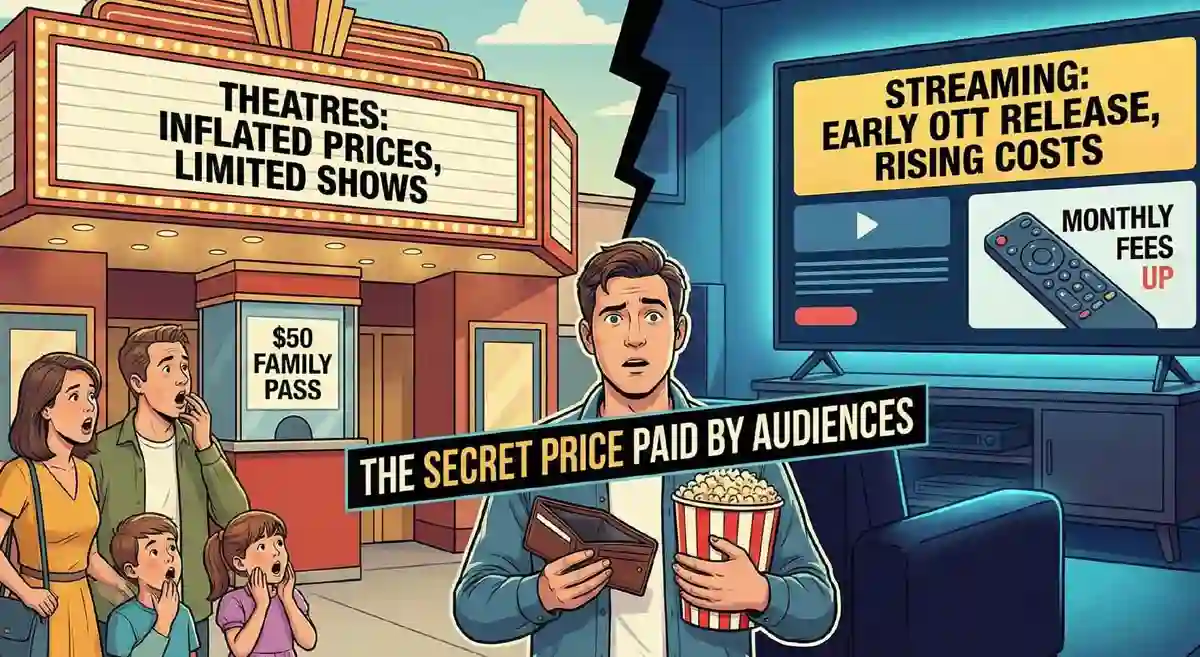
Before any film releases, a common complaint echoes through press meets and interviews: audiences are no longer coming to theatres. Filmmakers cite changing habits and post-pandemic fatigue, projecting concern for the survival of the big-screen experience. However, this public show does not match with behind-the-scenes realities, where OTT rights are already sold for hefty sums well before release, with agreements that allow films to stream within just a few weeks of hitting cinemas.
Compounding this issue is the role of governments in repeatedly approving higher ticket prices, allegedly to support the film industry. While these hikes are presented as necessary for recovery, they have instead pushed theatrical viewing further out of reach for families and middle-class audiences. Higher prices, combined with the certainty of a near-term OTT release, naturally discourage theatre visits — a decline that is then conveniently cited as proof that audiences have “moved on.”
This pattern is not limited to one region. In the United States, even smaller, independent films — often with modest box office expectations — have seen average ticket prices nearly double over recent years. For many moviegoers, a family outing to watch a film in cinemas now costs as much as a night out, making the wait for an OTT premiere a more budget-friendly choice and further eroding the traditional theatrical window.
Critics argue that this is less an unfortunate trend and more a carefully engineered cycle. This is the makers’ way of making money while the theatres are still alive. Guaranteed OTT revenue minimizes risk, inflated ticket prices maximize short-term gains, and emotional appeals before release help deflect accountability. In this ecosystem, one set of audiences pay more for theatres, wait longer, and other sections pay for OTTs increasing prices— all while being told that the fall of theatres is their fault. Pay for theaters and OTT yet take the blame while makers are pocketing monies
-A True Telugu Cinema Abhimaani