



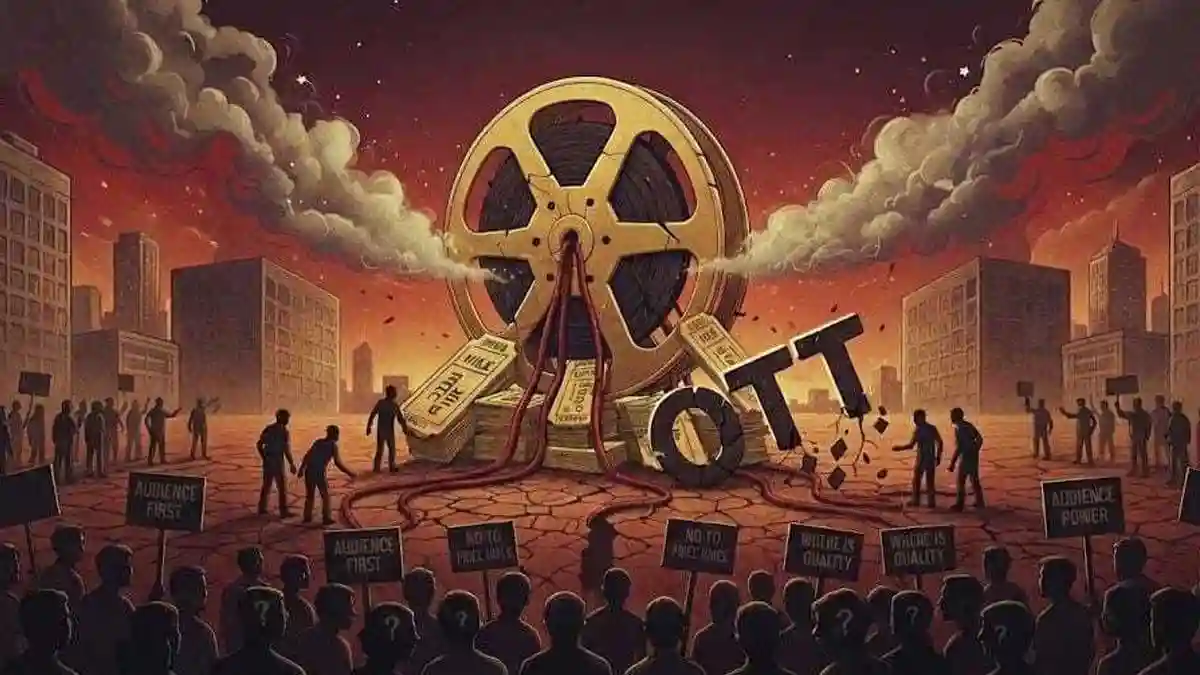
Learning From History: The Real Estate Bubble
Times are changing, but history always teaches us something. Think back to the 2008 real estate bubble: people kept buying houses on loans, builders kept increasing prices, people still kept buying, and prices shot up until the bubble finally burst, bringing down the entire economy.
Who profited in that chaos? Only the builders.
A Similar Pattern in Telugu Cinema
Today, Telugu cinema is stuck in a similar cycle. Every big-budget movie arrives with a government-approved ticket price hike. Because of the hype and star power, people still pay.
Regardless of the movie’s quality, some producers rely heavily on early influencer reviews and online buzz to strengthen opening-weekend numbers. By Monday, if the film collapses, no problem. OTT deals already cover the losses.
The OTT Bubble Is About to Burst
With OTT buyers becoming more discerning, some producers are prioritizing combination-based projects. In the race to meet demand, a few films may feel creatively underdeveloped.
Netflix has already sensed this and is shifting towards producing its own Telugu content instead of buying weak big-ticket films.
The Devastating Impact on Small and Good Films
This practice is slowly killing parallel cinema and small-budget films in Telugu. Audiences who already paid high ticket rates for disappointing big films avoid small movies altogether.
With low footfall, theaters stop supporting small films. OTT platforms, already burnt by bad big-ticket movies, will not buy good small films either from industry. Netflix already started this by acquiring big studios like Warner Bros and HBO to produce its own content.
Urban audiences are drifting to alternatives like affordable cricket matches, concerts, and musical nights.
Non-urban audiences are shifting to streaming cricket and reality shows. This collapse affects the entire ecosystem, from small producers and theater owners to young actors and new directors.
Who Ends Up Gaining From This Trend?
Some of the producers involved in this cycle may not immediately feel its long-term impact, largely because of the scale and security they operate with.
Likewise, a few Telugu actors, among the highest paid in the country, often remain insulated by the systems around them. Even if the industry faces challenging phases, their position allows them to stay relatively unaffected.
This comes from a lack of love for the industry and too much focus on self-preservation. And the most powerless people in this whole ecosystem are the fans, who will not even realize what hit them when their favorite heroes’ films become indefensibly bad.
Online Noise & Fan Wars
To maintain hype and manage online conversations, some coordinated digital activity can end up intensifying fan wars. This often leads to:
– Attack rival films
– Create fake positivity for bad movies
– Spread negative narratives about genuine reviewers
– Manipulate social sentiment to pressure the audience
This chaos benefits the big players while dividing and distracting fans from demanding quality cinema.
Not Against Commercial Cinema, Only Against Greed
I love well-made commercial films, even more than parallel films. But in the last two years, only two such films even qualified as “well-made.”
Today, films are being made with combinations, not intentions, backed by arrogance that they can push anything using their asthana influencers turned pseudo-reviewers. This trend must stop.
A Reality Check for All of Us
Name the last big-ticket hero movie (not from your favorite hero) that you genuinely liked. That answer alone will show how far the quality has fallen.
We Are Audience First, Fans Later
Let us come together and question this trend.
Let us resist ticket price hikes.
As one Telugu producer once said, “If you cannot afford, do not watch.”
Well, today, we cannot afford these movies, not financially and not creatively.
-A True Telugu Cinema Abhimaani